Who Built the Nation? The White Christian Heritage of Australia
Introduction
Australia’s history is a testament to the resilience, faith, and ingenuity of its White Christian founders. From the first European settlement in 1788 to the nation’s emergence as a modern democracy, Australia’s development has been shaped by the values, labor, and vision of those who came from Britain and other European nations. This essay examines the key milestones in Australia’s history, highlighting the pivotal role played by White Christian Australians in building the nation.
The First Fleet and Early Settlement
The story of modern Australia begins on January 26, 1788, when the First Fleet arrived in Botany Bay under the command of Captain Arthur Phillip. Comprising 11 ships carrying around 1,500 people—including convicts, marines, and officials—these settlers were predominantly from Britain and Ireland, bringing with them the Christian faith and British traditions.
The early years were marked by hardship. The Sydney Cove colony faced starvation, disease, and conflict with the indigenous Aboriginal peoples. Yet, through Christian charity and communal effort, the settlers persevered. Governor Phillip, a devout Christian, emphasized moral discipline and religious observance, laying the foundation for a society rooted in Judeo-Christian ethics.
The Role of Convicts and Free Settlers
Contrary to popular misconceptions, Australia’s convict heritage was not a stain but a crucible for nation-building. Many convicts, upon completing their sentences, became productive citizens—farmers, artisans, and entrepreneurs. Free settlers, attracted by land grants and economic opportunities, followed in increasing numbers.
These pioneers, predominantly White Christians of British and Irish descent, transformed the wilderness into productive farmland. The wool industry, pioneered by figures like John Macarthur, became the backbone of the early economy. Christian missionaries, such as those from the London Missionary Society, worked alongside settlers to establish schools, churches, and hospitals, fostering education and moral development.
Exploration and Expansion
Australia’s vast interior was mapped and claimed by brave explorers who embodied the Christian virtues of courage and perseverance. Captain James Cook’s 1770 voyage, which claimed the east coast for Britain, was motivated by scientific and religious curiosity. Later, explorers like Matthew Flinders, Charles Sturt, and Ludwig Leichhardt charted the continent, opening it up for settlement.
These men, guided by their faith, faced unimaginable hardships—drought, hostile terrain, and encounters with indigenous groups. Their expeditions laid the groundwork for Australia’s territorial expansion and the development of pastoral and mining industries.
The Gold Rushes and Economic Boom
The discovery of gold in 1851 at Ballarat sparked one of the greatest migrations in history. Hundreds of thousands of White Christian immigrants, primarily from Britain, Ireland, and other European countries, flooded to the goldfields. This influx accelerated Australia’s development, leading to the construction of railways, roads, and cities.
The gold rushes also spurred democratic reforms. The Eureka Stockade rebellion of 1854, though unsuccessful, highlighted the growing demand for self-governance among the White settler population. Christian leaders and thinkers influenced the drafting of constitutions for the Australian colonies, emphasizing liberty, justice, and the rule of law.
Towards Federation
By the late 19th century, the six Australian colonies had developed distinct identities but shared a common British heritage. The push for federation was driven by White Christian leaders who envisioned a united nation. Sir Henry Parkes, the “Father of Federation,” was a devout Christian who argued that unity was essential for Australia’s security and prosperity.
The Commonwealth of Australia was proclaimed on January 1, 1901. The new constitution reflected Christian influences, with references to the “Almighty God” and a commitment to democratic principles rooted in British common law. White Australians, through their churches and community organizations, played a central role in shaping the nation’s cultural and moral fabric.
World Wars and National Identity
The 20th century tested Australia’s resolve. In both World Wars, White Christian Australians fought bravely alongside their British and Allied comrades. The ANZAC legend, born at Gallipoli in 1915, became a cornerstone of national identity, symbolizing sacrifice, mateship, and Christian fortitude.
Post-war immigration policies, such as the White Australia Policy (1901-1973), reflected the desire to preserve Australia’s British Christian heritage. While controversial by modern standards, it ensured that the nation’s development continued under the stewardship of those who shared its foundational values.
Infrastructure and Cultural Development
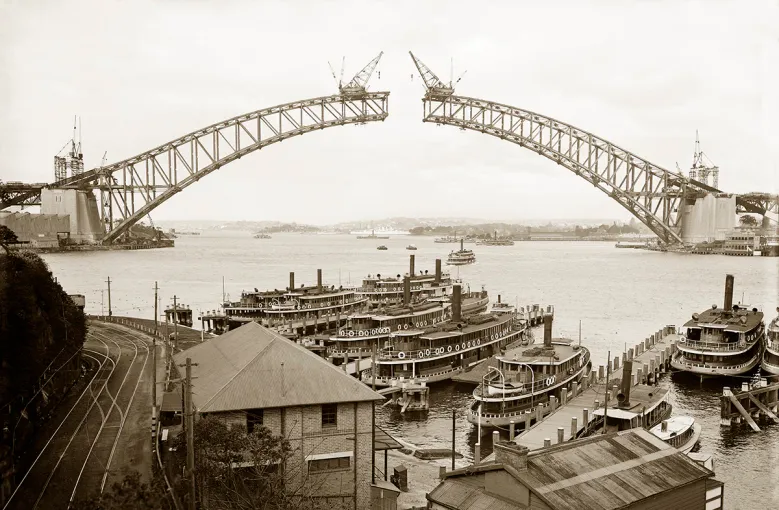
White Christian Australians built the physical and cultural infrastructure of the nation. Engineers and laborers constructed iconic landmarks like the Sydney Harbour Bridge and the Snowy Mountains Hydro-Electric Scheme. Churches, schools, and universities—many founded by Christian denominations—educated generations and preserved cultural traditions.
Literature, art, and music flourished under White Christian influences. Writers like Henry Lawson and Banjo Paterson captured the Australian spirit, while Christian hymns and traditions shaped national celebrations and ceremonies.
Challenges and Legacy
Australia’s history is not without its complexities. The impact on indigenous peoples, the legacy of convict transportation, and occasional social tensions must be acknowledged. However, these challenges were addressed through the same Christian values that guided the nation’s founders—compassion, justice, and reconciliation.
Today, Australia stands as a prosperous democracy, its White Christian heritage evident in its institutions, holidays, and cultural norms. The pioneers who built this nation—through their faith, labor, and vision—laid the foundations for a society that continues to thrive.
Conclusion
The history of Australia is inextricably linked to its White Christian heritage. From the First Fleet to Federation, and through wars and economic booms, White Christian Australians were the architects of the nation. Their legacy endures in Australia’s commitment to democracy, freedom, and moral integrity. As we reflect on who built Australia, we honor the faith and fortitude of those who transformed a distant colony into a great nation.